Meet the trainee: Dr. Martin Holmes on geography, food access and health outcomes
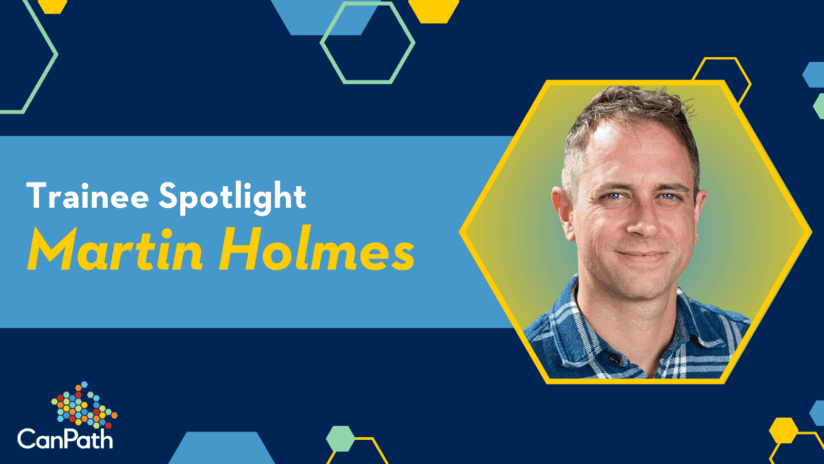
The most interesting science can come about when we use our knowledge of one area to start asking questions about another. We had the amazing opportunity to speak with Dr. Martin Holmes, a Postdoctoral Fellow in the Department of Geography and Planning at the University of Toronto, studying the intersection of public health, geography, and the food environment. Through a wide variety of interests, his unique research question is supporting the work of the HEAL and CHARM studies. Our ongoing Trainee Spotlight Series highlights the talented and dedicated trainees and students supporting public health research in Canada.
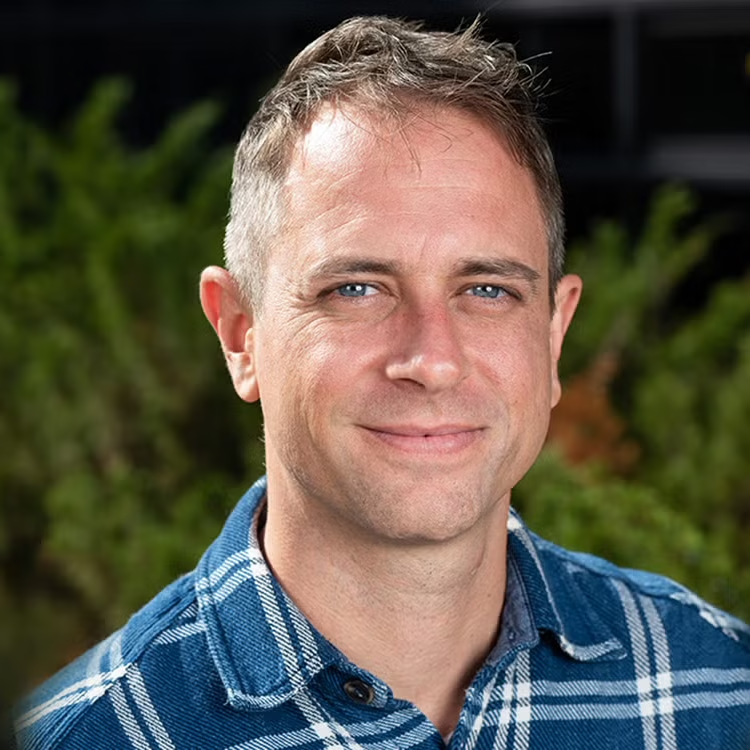
We asked Martin to give us a glimpse into his day-to-day work, share key takeaways he has gained through his career journey, and offer advice to early-career researchers looking to support the future of health research.
Q: Could you tell us a little bit about your role and what your day-to-day looks like?
“I’ve been involved with the HEAL study for just coming up to two years. My main role was to lead the development of version two of the Canadian Food Environment database (CANFed) and that required a lot of decisions and communicating with StatsCan who are the analysts and were the ones developing it through their business registry. It was sort of project-leading and now we have the data, there’s some exploration that’s happening, working towards getting it integrated. So, some database leading and creation, and now some database management, but also some research on how we apply what we have to some of our most pressing health issues that the country is experiencing.”
Q: What makes CanPath and the HEAL and CHARM studies valuable for the work you are supporting?
“It’s such a unique database with how many people have participated and the richness of the data that they’ve collected. It’s giving us the opportunity to go beyond just describing neighbourhoods and seeing how people themselves are interacting with those neighbourhoods, or not, and what sort of outcomes can come with them.
I really enjoy that the CanPath data is longitudinal, where [the places] someone lived 10, 15, 20 years ago could have an impact on their health more than just where they currently sit or lay their head at night. A particular value is in these linkages that are able to be made. But the other part of the HEAL, CHARM and CanPath data is the network of people that’s available through it. Principal Investigators on these projects are so generous with their time, with their desire to develop younger people through skill building and through access to opportunity. And, the graduate students, the trainees, they are so great to ask for advice and tips on any sort of research methods. They’re not scared to do the hard work.”
Q: Do you have any advice for other trainees or early career researchers who’s curious about using population health data?
“Sometimes you have to take your own initiative to find out what’s happening. Keep yourself in tune with what’s happening. Every time a newsletter came across my e-mail, I was subscribing, whether or not I attended every event didn’t always matter. You also don’t know what you’re going to need in the future. Sometimes joining a webinar or learning something that might not be completely practical to you today, might be something that comes up in two years that could help you solve a problem. Also, trainees or early career researchers really should devote some of their time to understanding the data that they’re working with. It’s an overarching system that has the data, so you’re not just learning about your specific sliver. Feeling comfortable enough to reach out to a supervisor or a supervisor’s colleague to ask these questions, taking advantage of the system of the data that is available, the ecosystem of people that are available, can get your questions answered.”
Martin’s work is supporting our understanding of how food, physical activity, and environment all play a role in the health of Canadians. CanPath is grateful to work with innovative students who are making strides to improve the future of health research.
For more information, please contact:
Megan Fleming
Communications & Knowledge Translation Officer
Canadian Partnership for Tomorrow’s Health (CanPath)
info@canpath.ca