Decoding Healthy Aging: What Blood Reveals About Resilience and Disease Risk
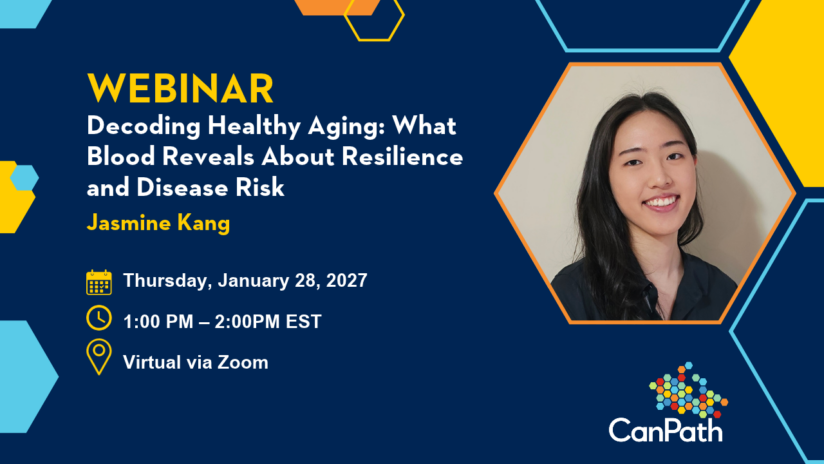
What is molecularly distinct about people who age without developing disease, or in other words, “resilient agers”? In this webinar, Jasmine Ryu Won Kang explains how blood draws were used to extrapolate features of resilient aging with cutting-edge omics techniques performed on CanPath participant samples. This resilient aging cohort is the first of its kind to harness deep molecular phenotyping – single cell RNA sequencing, bulk ATAC sequencing, low-pass whole genome-sequencing, and, most recently, proteomic profiling – on roughly 350 individuals’ blood. The resulting multi-omic resource allowed the team to connect molecular features to clinical complete blood count indices, and answer how healthy and unhealthy blood differ across the spectrum of aging.
Presenter bios:
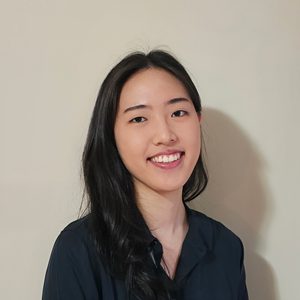
Jasmine Kang
Jasmine Ryu Won Kang is an MD-PhD student at the University of Toronto. She is completing her PhD in the Department of Molecular Genetics, co-supervised by Dr. Philip Awadalla and Dr. John Dick. Her doctoral work focuses on health aging in blood and the molecular determinants underlying abnormal blood cell traits that predispose incident disease, using population cohort data and multi-omics technologies. She is supported by the CIHR Canada Graduate Research Scholarship – Doctoral Award, and has previously been supported by Ontario Graduate Scholarships and a Scholar in Training Award from the American Association for Cancer Research.
Dr. Philip Awadalla

Dr. Philip Awadalla is the National Co-Scientific Director at CanPath, a Senior Professor of Molecular Genetics at the University of Oxford and a Professor at the University of Toronto. Previously, as Director of Computational Biology at the Ontario Institute of Cancer Research, he advanced early cancer detection and precision oncology, focusing on clonal hematopoiesis, breast, and prostate cancer. His research on rare mutations has informed disease susceptibility in cancer, psychiatric conditions, and aging.