A look inside the Participant Advisory Committee for CHARM: Meet Jayesh
Discover what motivates members of the CHARM study’s participant advisory committee (PAC), who are helping to bring participants’ perspectives into the research.
The HEAL study examines how factors, like access to healthy food and the environment we live in, influence how people in Canada eat and move. This five-year project is analyzing data from surveys of over thousands of individuals and combining it with environmental information to provide crucial evidence to promote healthier eating and activity environments across Canada.
CHARM takes this research one step further and is zeroing in on how our diet affects metabolic health. Building on the data gathered in HEAL, CHARM is collecting blood and stool samples from 4,500 participants to uncover how diet influences our biology and long-term health. With this data, CHARM aims to understand how the link between diet and health may differ among people with different characteristics.
An important part of the CHARM study is the PAC, which provides invaluable insights, perspectives, and feedback on the research, from beginning to end. The CHARM PAC is made up of people who are part of groups that have been historically left out of health research, or who are living with or have had a long-term health condition.
Over the coming months, we invite you to meet members of the PAC, who have generously offered their time, perspective, and experience to this research.
Meet Jayesh
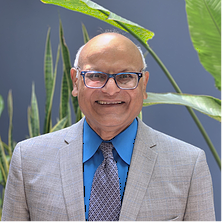
Jayesh’s decision to join the CHARM PAC is a personal one.
“My son had cancer when he was in his 30s. Thankfully, his treatment was very successful. Participating in this study is my way of showing my appreciation,” he said.
There has been a host of research into the potential associations between diet and cancer risk. While some things we consume, like alcohol and processed meats, are known to increase the risk of cancer, there are still many questions to explore.
“I know that almost everyone knows someone — a family member, friend, colleague, or acquaintance — who is dealing with some form of cancer. I am hoping this study will lead to some conclusions in cancer prevention and cure,” said Jayesh, who is a retired educator who stays active and volunteers heavily.
The strength of the PAC
Research studies, such as HEAL and CHARM, would not be possible without effective community engagement. Participants are central to understanding what matters most to the people at the heart of the research. Joining a PAC gives participants the opportunity to share their own personal experiences and perspectives to help make studies more participant-friendly, relevant, and useful.
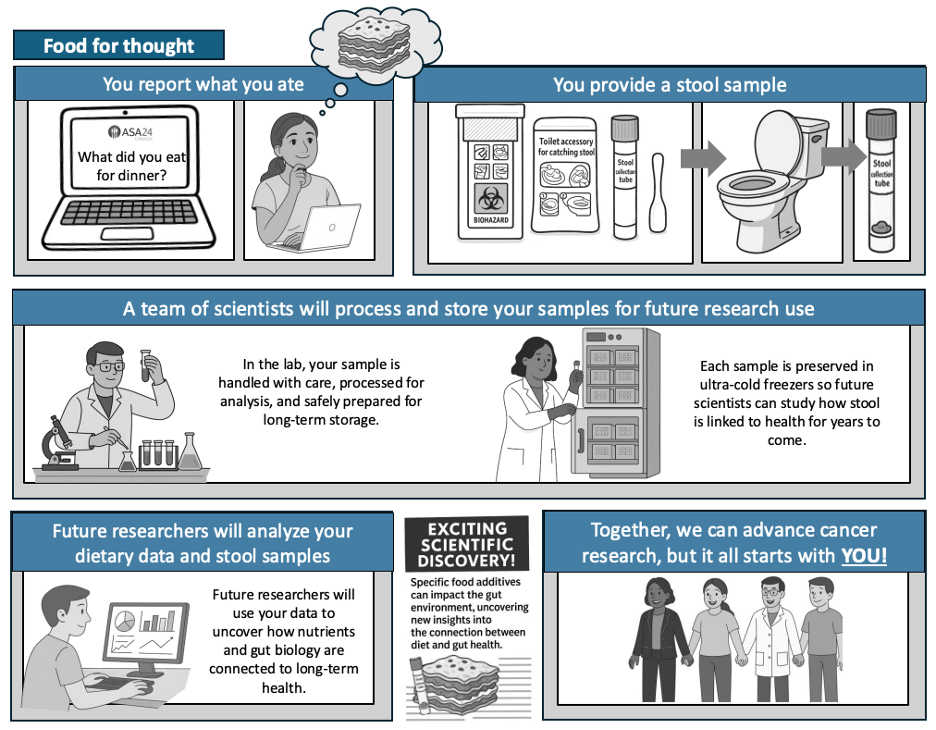
Members of the CHARM PAC support the study in many ways. They share feedback and ideas about the project and advise the team on how to communicate research findings with participants and the public. For example, Jayesh helped shape a comic that explains the stool collection process. So far, the comic has been included in roughly 500 stool collection kits.
Deciding whether to join a PAC is a personal choice. Involvement requires time, energy, and sometimes, long-term commitment. But the benefits and satisfaction of being a PAC member are clear for Jayesh.
“By being in this study’s PAC, we are contributing towards more knowledge about cancer, chronic diseases, and ways to reduce or prevent their occurrence,” emphasized Jayesh.
Not only does PAC involvement benefit the research itself, but it can also benefit the participants by providing reassurance that they are not alone.
“Hopefully, participants can reflect on their stories and see how similar everyone’s story is,” said Jayesh.
For the good of the people
“Preventing chronic diseases will lead to a better life, pain-free, for individuals and people close to them, and provide a longer, fulfilling life,” said Jayesh when asked why research on chronic disease prevention is important to him
The findings from HEAL and CHARM will help build evidence to inform policies, programs, and environments that support health. By addressing the factors and situations that shape what people eat and how they live, this research can contribute to reducing risk of chronic conditions, such as cancer, across Canada.
“I am hoping this research will help Canadians make good decisions on factors that they can control to reduce or eliminate risks in getting cancer,” concluded Jayesh. “This study may also inform government policies to encourage a better lifestyle for the population.”
Jayesh’s story shows why participant voices matter. By sharing his time and experience, he is helping the research team make the study clearer, more useful, and more connected to the people it aims to serve.
Follow along over the coming months as we introduce additional PAC members and share what motivates them to take part in HEAL and CHARM.