Summer is almost here, and your neighbourhood may shape how much you move this season
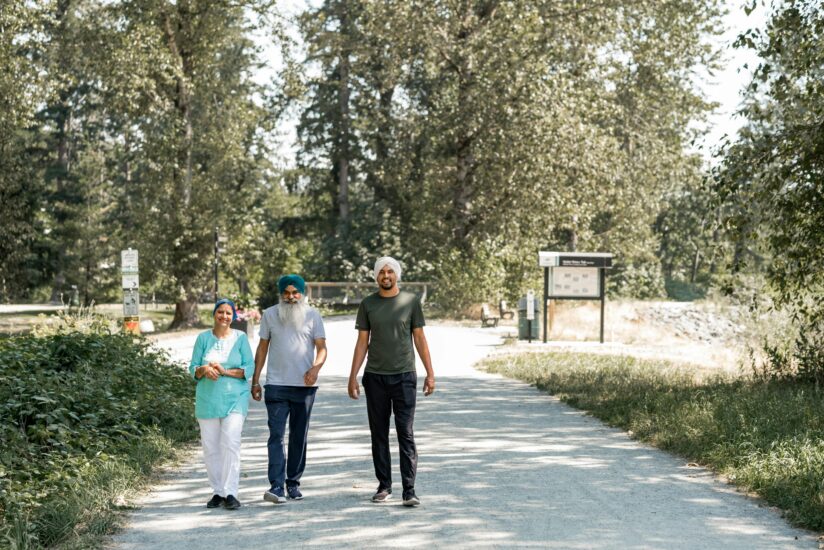
The snow is melting, flowers are in bloom, and the days are getting longer. For many Canadians, summer is the season that finally makes getting outside feel possible again: a walk after dinner, a bike ride on the weekend…
But have you ever wondered why some neighbourhoods seem to make it easier to be active than others? Researchers using data from CanPath’s regional cohorts have been asking exactly that question, and the answers are shaping how we think about health, community design, and the future of chronic disease prevention in Canada.
Your neighbourhood is more than a backdrop
Where you live may influence how much you move in ways that go beyond personal motivation or schedule. A study using data from Alberta’s Tomorrow Project — one of CanPath’s regional cohorts — followed nearly 6,000 urban adults and found that people who moved to less walkable neighbourhoods walked significantly less than those who stayed put: about 41 fewer minutes of transportation walking per week. That’s not a small number. Over time, that gap could have real consequences for health.
What makes a neighbourhood “walkable”? Researchers look at things like how many destinations are within easy reach, how connected the streets are, and how densely populated the area is. The more walkable a neighbourhood, the more likely its residents are to walk as part of their daily lives.
A second study, this one drawing on data from Atlantic PATH in Nova Scotia, reinforced why this matters. Researchers found that low levels of physical activity were significantly associated with higher rates of diabetes, cancer, and multimorbidity — having multiple chronic conditions at the same time. More walkable communities, meanwhile, had lower rates of some chronic diseases. Being active is protective, and the environment around you can either support or undermine that.
Green space and cancer risk
Researchers have also started asking a more specific question: does living near green space — parks, trees, natural areas — influence cancer risk directly? A third study used Alberta’s Tomorrow Project data to examine whether greenness and walkability were associated with breast cancer risk in post-menopausal women, following over 15,000 participants for more than 12 years.
The results are interesting but not definitive. There was a trend toward slightly lower breast cancer risk in greener areas, but the difference wasn’t large enough to be certain it wasn’t due to chance. Walkability didn’t show a clear pattern either. The researchers concluded that more research is needed in different communities, over longer periods of time, with more detailed data.
That last part is important. Not finding a clear answer doesn’t mean the question isn’t worth asking. It means we need better tools and resources to answer it.
Where the HEAL and CHARM studies come in
The studies above were built on questionnaire data collected years ago — snapshots of how people reported their activity and where they lived at a given point in time. Valuable, but limited.
The HEAL (HEALthy Eating and Supportive Environments) study is designed to go further. As part of HEAL, researchers are collecting detailed data on how Canadians eat and move multiple times over the course of a year, capturing seasonal patterns and day-to-day variation. This new data will be linked to information about participants’ food and built environments: how walkable their neighbourhood is, what green space is nearby, and what kinds of food outlets are within reach.
This richer, more detailed picture is exactly what’s needed to answer the questions that earlier research raised but couldn’t fully resolve. Does green space reduce cancer risk? Does walkability protect against chronic disease over time, and if so, how? Which communities are most underserved by their environments and what would need to change?
Select participants are also contributing to CHARM, which adds blood and stool samples to the mix, connecting environmental and behavioural data to what’s actually happening inside the body. Together, the HEAL and CHARM studies are building the largest dataset on diet, movement, and environment ever assembled in Canada.
As the weather warms and you head outside, know that your activity and the environment that shapes it is part of something larger. Every questionnaire you complete is a data point in an ongoing national effort to understand how where we live affects how we thrive.
Whether you’re in a neighbourhood with great bike lanes and a farmers’ market around the corner, or one where getting around on foot takes more effort, your experience matters to this research. Canada is a big, diverse country, and understanding the full range of environments Canadians live in is what makes CanPath’s work so powerful.
For more information, please contact:
Megan Fleming
Communications & Knowledge Translation Officer
Canadian Partnership for Tomorrow’s Health (CanPath)
info@canpath.ca