Meet the trainee: Ashley Mah on studying racial and ethnic disparities in breast cancer with CanPath data
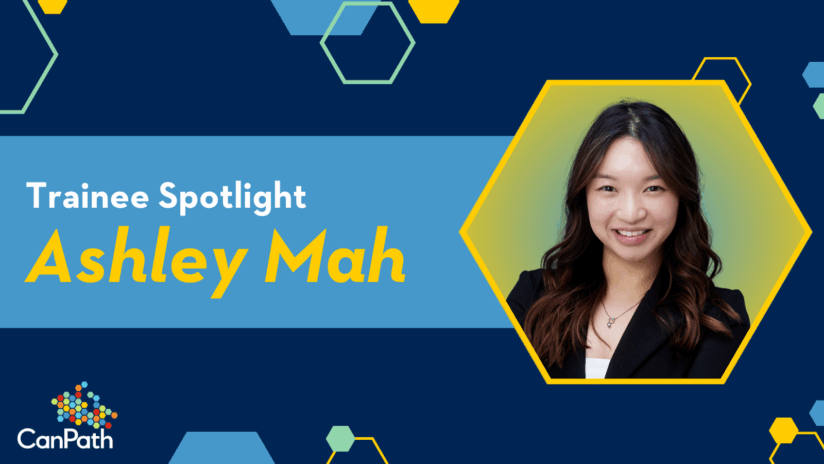
Working with data can be daunting, but young researchers are true champions of tackling large-scale issues with creativity and determination. At CanPath, we want to highlight the amazing work of students, trainees, and early-career researchers who are using population health data to change the future of health research. This year, we are introducing our new Trainee Spotlight Series, an interview series where we sit down with some of the incredible students working with and around CanPath and learn more about their roles, learning experiences, and career trajectories as they share their advice for aspiring researchers.
To kick off our series, we had the opportunity to interview Ashley Mah, a Research Coordinator and second-year PhD candidate working with CanPath data to study racial and ethnic disparities in breast cancer among Canadian women.

We asked Ashley to share what she learned through her research experience and her advice for early-career researchers and young students looking to embark on their research journey. The full interview can be viewed on our YouTube channel, and here are a few highlights:
Q: What does your day-to-day look like working as a Research Coordinator?
“The majority of my duties include ensuring that our project team is on track with meeting our goals, ensuring that we are coordinating data access for everybody, and, because we have a project team that spans the country, we have to make sure that everybody is keeping on track and meeting regularly to ensure that we are meeting our deadlines. I am also working on part of the analysis as well, which is really my favourite part as someone who works with data.”
Q: How did working on this project shape how you think about population health?
“This is such a strong dataset because it includes people from all over Canada, and that’s not necessarily something we see a lot. Often, things are quite siloed, and we see small groups here and there, but it’s quite hard to include everybody. I think being able to step back and have the opportunity to use data where we can get this bigger picture and really think about how our results can impact women across Canada was really something that was new to me, and I found it was really impactful.”
Q: How does being a Research Coordinator fit into being a PhD student?
“When you’re a Research Coordinator, you learn a lot of skills that are important to becoming a researcher. Sometimes, when you work with data, you just focus on the numbers in front of you. But I think that being a Research Coordinator helps you understand the process of how that data is collected and how that data has come to you. There are so many people involved … it really provided me with a lot of appreciation for the whole process of data and not taking data for granted and people’s time and understanding the effort that goes into this. Also just understanding the full process of the research pipeline from creating a research question to forming your analytic plan, to submitting for ethics, to dissemination. It’s not just writing papers, but it’s ensuring that the findings get out to people through media and that the research we’re doing is really having the impact we want.”
Through her work with CanPath, Ashley has gained valuable experience and continues to build a strong foundation in population health research. Her story is just one example of how trainees are using large-scale data to explore important questions and advance public health knowledge. Stay tuned as we share more stories from trainees across the CanPath network and highlight the many ways researchers are engaging with population health data.
For more information, please contact:
Megan Fleming
Communications & Knowledge Translation Officer
Canadian Partnership for Tomorrow’s Health (CanPath)
info@canpath.ca