Researchers receive $2 million in funding to investigate how ultra-processed foods may affect colorectal cancer risk

TORONTO, ON — March 5, 2026. A newly funded Canadian research team is launching a multi-provincial study to understand whether ultra-processed foods are linked to colorectal cancer and, if so, how?
The project, known as UPFront (Ultra-Processed Foods and Cancer: Advancing Evidence on the Biological Mechanisms Linking the Gut Microbiome, Ultra-Processed Foods and Cancer), is co-funded through a Canadian Cancer Society grant and the Canadian Institutes of Health Research (CIHR) Institute of Cancer Research’s Bringing Biology to Cancer Prevention Team Grant. The interdisciplinary study brings together experts in nutrition, cancer biology, immunology, microbiology, bioinformatics, and population health from institutions across Canada and internationally.
Led by Dr. Rachel Murphy (BC Cancer and the University of British Columbia), the team aims to examine how consumption of ultra-processed foods (UPFs) may influence colorectal cancer development, from population-level risk factors to biological mechanisms within the body.
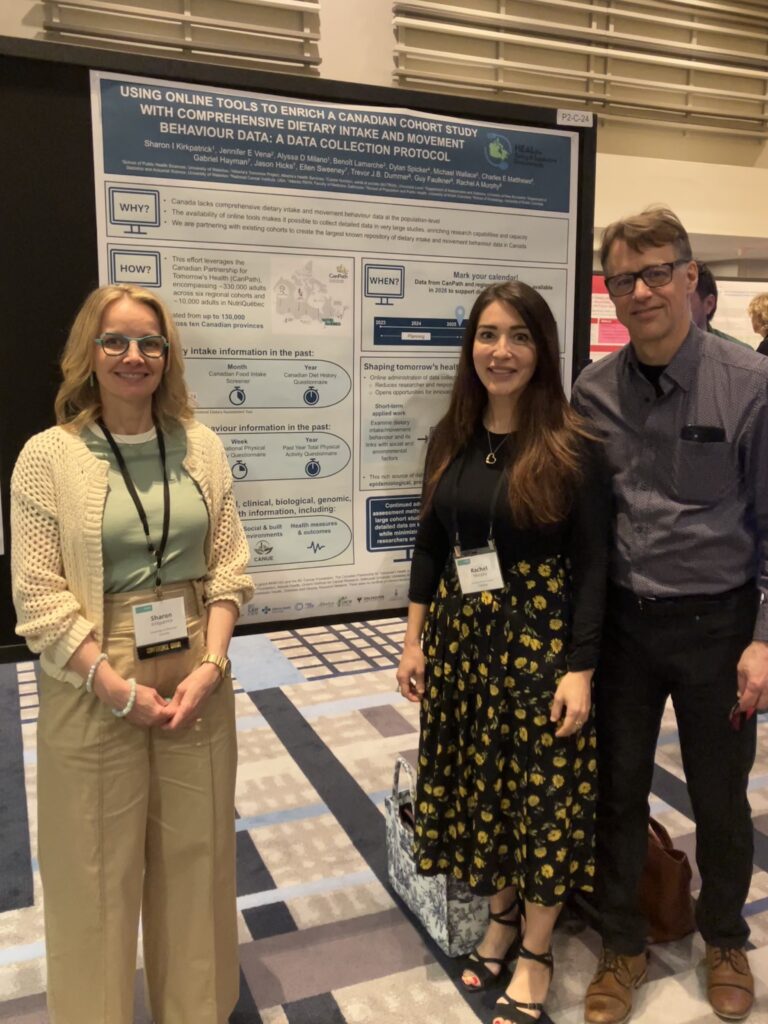
“We are seeing more cases of colorectal cancer occurring at younger ages, which may reflect changing patterns in dietary intake, and physical activity,” said Dr. Murphy. UPFront brings together experts across disciplines to better understand how commonly consumed foods, and qualities of the foods may influence colorectal cancer risk and targets for interventions to support long-term health.
Addressing a growing cancer prevention challenge
Colorectal cancer is the fourth most commonly diagnosed cancer in Canada and remains a leading cause of cancer-related death, ranking second among men and third among women. Globally, the burden of colorectal cancer is expected to exceed 2.2 million new cases and 1.1 million deaths each year by 2030.
In recent decades, researchers have also observed a rise in early-onset colorectal cancer, diagnosed in adults under age 50, across Canada and many other countries. This trend has prompted calls to reconsider current screening recommendations, which typically begin at age 50 for people at average risk.
While the reasons behind this increase are not yet fully understood, scientists are studying whether changes in diet may play a role, including rising consumption of UPFs. These industrially manufactured products, such as packaged snacks, sugary drinks, and many ready-to-eat meals, now make up a growing share of modern diets, and relatively little is known about their long-term effects on health.
Aligned with the 2026 Colorectal Cancer Awareness Month theme, “Uniting for Equity Across the CRC Continuum,” the UPFront team will examine how diet, and biological factors interact to influence colorectal cancer risk across diverse populations.
A national foundation for discovery
The UPFront study builds on large-scale diet, health and biospecimen data collected through the HEAL (HEALthy eating and supportive environments) and CHARM (CHARacterizing heterogeneity in dietary intake among structurally excluded populations using Multidimensional data) studies.
HEAL and CHARM are nested within the Canadian Partnership for Tomorrow’s Health (CanPath), Canada’s largest population health cohort. Since 2009, CanPath has recruited adults across all ten provinces and is now one of the most comprehensive collections of health and behaviour data in the country.
“Large national studies like CanPath allow researchers to connect lifestyle, environment, and health over time,” says Dr. Jennifer Brooks, CanPath Executive Director. “By supporting projects like HEAL, CHARM, and now UPFront, we’re helping generate the evidence needed to advance cancer prevention for future generations.”
The HEAL study is generating the largest collection of dietary data in Canada, capturing dietary intake over the past day, month, and year. CHARM complements this work by collecting biospecimens (blood and stool) from a subset of HEAL participants, many of whom are from groups historically underrepresented in health research based on factors such as experiences of discrimination, lower income and education. Together, the data generated through HEAL and CHARM form the foundation that makes UPFront possible.
“To understand how diet affects health, we need data that reflect how people really eat in their everyday lives,” says Dr. Sharon Kirkpatrick of the University of Waterloo, HEAL & CHARM co-lead. “The HEAL and CHARM studies are helping us capture that picture across diverse communities in Canada, creating new opportunities to study diet and disease in ways that weren’t possible before.”
Understanding how UPFs may influence cancer risk
UPFront asks, do UPFs cause colorectal cancer? And if so, how? To answer this question, researchers will use dietary data collected in HEAL, blood and stool collected in CHARM, alongside complementary studies led by the UPFront team members: specimens from a feeding study of UPFs, an animal model of colorectal cancer, and models of the gut to further understand the potential effects of food additives commonly found in UPFs.
Together, these studies help researchers examine not just whether UPFs are linked to colorectal cancer, but what aspects of UPFs (e.g. nutrients or additives), and how they may affect the body in ways that increase colorectal cancer risk.
From population data to biological insights
By combining evidence from population-based research, controlled feeding studies, and experimental mouse models, UPFront aims to move beyond simply finding links toward understanding how UPFs cause cancer, and which components of UPFs contribute to the risk.
“What we eat provide nutrients and shapes how our immune system and gut microbes function,” says Dr. Kathy McCoy of the University of Calgary. “Studying these biological interactions helps us understand how everyday exposures, including diet, may influence cancer development over time.”
The project also includes strong knowledge mobilization partnerships with organizations such as Heart & Stroke and Health Canada. These collaborations will help support translation of research findings into policy, practice, and public health guidance. Health Canada will help guide the project to ensure that the chemicals it tests and the data it generates are of greatest use in regulatory and assessment contexts.
Findings from UPFront aim to inform future prevention strategies and help build evidence that supports healthier food systems and public health decision-making.
“Diet is one of the few cancer risk factors that individuals and societies, especially, can act on,” says Dr. Benoît Lamarche of the Université Laval. “By strengthening the evidence around ultra-processed foods and health, this research can help guide future prevention efforts and support informed choices at both the policy and population level.”
Stronger, together
The UPFront team includes researchers from BC Cancer, the University of British Columbia, University of Waterloo, Université Laval, University of Calgary, BC Centre for Disease Control, BC Children’s Hospital Research Institute, Institut Pasteur, Université Paris Cité, and additional national and international partners.
The team reflects a diversity of disciplines, career stages, and lived and living experiences, strengthening the interpretation and application of research findings across populations and communities.
Funding acknowledgement
UPFront is co-funded through the Canadian Cancer Society and the Canadian Institutes of Health Research (CIHR) Institute of Cancer Research’s Bringing Biology to Cancer Prevention Team Grants program.
The HEAL study is supported by $1.7 million from the CIHR and over $400,000 from BC Cancer. CHARM is supported by $2.2M from CIHR and Genome British Columbia.
For more information or to schedule an interview, please contact:
Megan Fleming
Communications & Knowledge Translation Officer
Canadian Partnership for Tomorrow’s Health (CanPath)
info@canpath.ca
About CanPath
The Canadian Partnership for Tomorrow’s Health (CanPath) is Canada’s largest population health study, following hundreds of thousands of participants across the country to support research on cancer and chronic disease prevention.