Students explore AI solutions for mental health research using CanPath data at Toronto hackathon
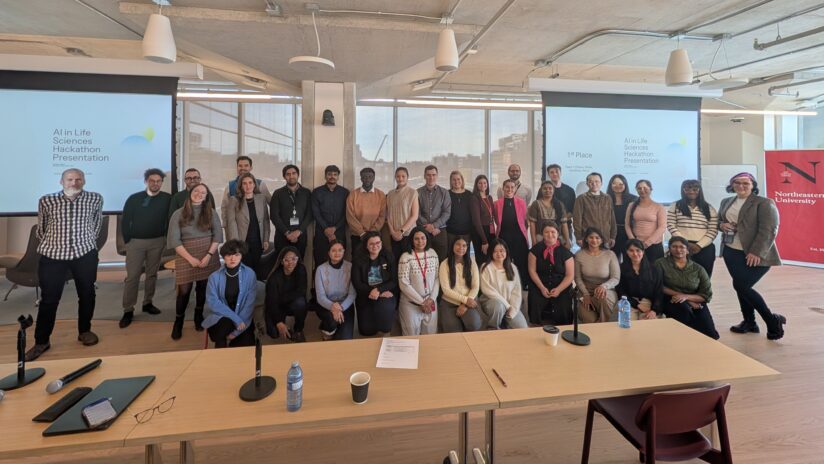
Toronto, ON — The emerging intersection of AI and population health research was on full display from February 24–26 as over 90 students from Northeastern University’s Toronto campus participated in this year’s AI in Life Sciences Hackathon. Working across seven interdisciplinary teams, students applied innovative analytical approaches to mental health challenges using CanPath’s synthetic dataset.
Hosted in partnership with Northeastern University, CanPath, Lifebit, the Ontario Brain Institute, and the Ontario Institute for Cancer Research, the event brought together students specializing in biotechnology, regulatory affairs, project management, and data analytics to develop real‑world, evidence‑informed solutions.
“What really amazed me was seeing the dedication of the students,” said Julia Micallef, Experiential Partnerships Specialist at Northeastern University. “The winning team especially had so many hurdles to overcome. They managed it all and still came out on top. And honestly, even the teams that didn’t win were so enthusiastic and grateful to be here and to present their work. The whole thing was just really inspiring.”

Students showcase evidence-based innovation
Throughout the three‑day competition, participants demonstrated strong analytical skills and creativity as they explored how AI can advance life sciences research. For CanPath, the event highlighted the growing value of providing students with secure, real‑world‑mimicking data to support experiential learning.
“What struck me most was the creativity of the pitches and how polished the teams were. The teams clearly did their homework. The approaches weren’t just creative. They were grounded in solid evidence and reasoning. As a judge, that made for some genuinely tough decisions,” says CanPath’s National Scientific Coordinator, Prof. Victoria Kirsh, and one of the judges for the hackathon.
Changing our approach to understanding anxiety
Hackathon teams focused on pressing mental health challenges, particularly anxiety and its drivers. Their projects reflected strong critical thinking and integrated a range of biological, social, and behavioural factors.
First place was awarded to Team 7: Chloe Chan (Biotechnology), Christine Kapule (Biotechnology), Mary Ackah-Annor (Regulatory Affairs), and Mahalakshmi Srinivasan (Analytics). Their project models anxiety progression using GAD‑7 symptoms, gut health data, workplace stress indicators, economic conditions, and metabolic variables.
Second place went to Team 1: Melanie Melo (Biotechnology), Venkata Vinay Mahidhar Runku (Analytics), Divya Sharma (Bioinformatics), and John Justice Abban (Biotechnology). They proposed a complementary approach to predicting anxiety progression using CAN-BIND and CanPath datasets.
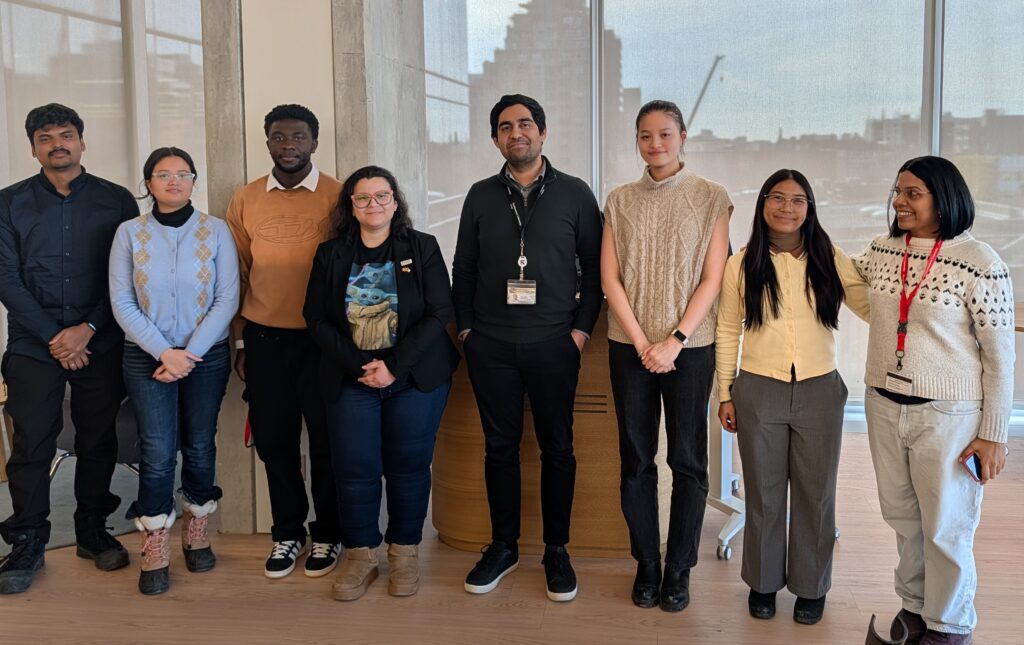
When asked how the experience connected to their academic and professional goals, Team 7 noted the value of cross‑disciplinary collaboration:
“It’s such a good idea to bring people from regulatory affairs, biotech and data analytics together, because this is quite literally translating to how we solve problems in the real world,” said Christine. “It’s a skill to translate complex ideas into lay terms to work with team members from across different fields.”
Team 1 related to these reflections as well:
“Rehearsing the pitch is as important as working on the data itself,” said Venkata. “In industry, it’s not just technical work. Communication and collaborating across teams really matter.”
Providing the data for student creativity
To support the event, CanPath provided students with access to its synthetic dataset, an educational tool designed for students to gain experience working with real-world health data without compromising our commitment to security and confidentiality.
Students accessed the data through a secure, cloud-based environment provided by Lifebit, allowing them to work hands-on with large-scale health data using modern research tools.
“I was surprised by how well the teams ended up harmonizing the data,” said Jeffrey Brabec, Lifebit Group Client Success Manager. “Once they got past that hurdle, their analyses and models were incredibly diverse. Each group went in its own direction, which was exactly what we hoped for.”
Students could explore data from 100,000 participants from over 900 categorical variables and environmental exposures from CanPath and CANUE. Data includes variables such as sociodemographic information, lifestyle factors, and chronic diseases such as cancer, high blood pressure, and arthritis.
CanPath is committed to supporting student learning and fostering innovation at the intersection of science, technology, and public health. Collaborations like this hackathon highlight how emerging professionals can use population data and AI to address complex health challenges.
A special thank you to Northeastern University, Lifebit, the Ontario Brain Institute, and the Ontario Institute for Cancer Research for making this inaugural event possible.
The CanPath team looks forward to supporting future workshops, hackathons, and other educational initiatives and partnerships. Interested in working with our dataset? Reach out to our team!
For more information please contact:
Megan Fleming
Communications & Knowledge Translation Officer
Canadian Partnership for Tomorrow’s Health (CanPath)
info@canpath.ca